My Husband Was Secretly Taking Photos of Me at Night — The Truth Changed Our Marriage Forever
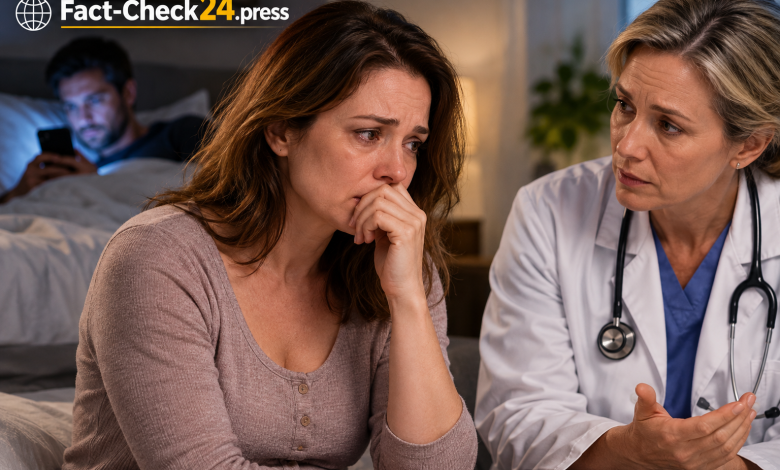
My Husband Was Secretly Taking Photos of Me at Night — The Truth Changed Our Marriage Forever
For seventeen years, I believed my husband and I shared everything. Then I discovered something he had been doing without my knowledge, and suddenly, I began questioning the trust we had spent nearly two decades building.
My name is Emily. I’m 39 years old, and I’ve been married to Daniel for seventeen years.
For most of our marriage, I considered us a happy couple. We had experienced the ordinary challenges of family life, raised a child together, and supported each other through difficult moments.
Daniel was thoughtful, hardworking, and usually attentive to my needs.
But a few months ago, something happened that made me see our relationship differently.
It began on an ordinary Tuesday night.
The Night I Noticed Something Strange
It was nearly two in the morning when I woke up and noticed a faint light beside our bed.
Daniel was sitting nearby, looking at his phone.
At first, I thought he was checking a message or struggling to sleep.
Then I heard the familiar sound of a camera.
I realized he was taking a photograph of me.
I remained still, confused about what was happening.
Daniel appeared to be documenting changes in my abdomen, which had become noticeably larger over the previous few months.
He entered something into his phone, studied the screen for a moment, and quietly returned to his side of the bed.
I didn’t know what to think.
Why would my husband photograph me without asking?
And why was he doing it in the middle of the night?
A Question He Wouldn’t Answer
The following morning, I decided to ask him.
“Daniel, were you taking pictures last night?”
He stopped stirring his coffee.
“What makes you ask?”
“I woke up and saw your phone.”
For a moment, he looked uncomfortable.
Then he gave me a small smile.
“I was just worried about you. You’ve seemed tired lately.”
“But why take pictures?”
He looked down at his coffee.
“I don’t know how to explain it right now.”
His answer made me more uneasy.
We had been married for seventeen years. I couldn’t remember another time when he had seemed so reluctant to tell me something.
I wanted to believe there was an innocent explanation.
But I also knew that something wasn’t right.
The Little Things I Started Noticing
Over the following days, I began paying closer attention.
Daniel often stayed awake after I went to bed.
Sometimes he sat quietly with his phone, writing notes or reviewing photographs.
One afternoon, I noticed a folder on his phone labeled with my name.
It was protected by a password.
I didn’t try to access it again. Instead, I asked him directly what it contained.
He said he would explain soon.
But soon never seemed to arrive.
Meanwhile, I had been experiencing a persistent feeling of heaviness in my abdomen.
I had dismissed it as something temporary.
Whenever Daniel asked how I felt, I gave him the same answer.
“I’m fine.”
It was the easiest way to end the conversation.
I didn’t realize how much that habit had shaped our marriage.
The Doctor’s Unexpected Question
Eventually, I decided to make a medical appointment.
I went alone because I wanted an opportunity to discuss my concerns privately.
My doctor, Dr. Sarah Miller, listened as I described the discomfort I had been experiencing.
She asked about my symptoms, how long they had lasted, and whether they had changed over time.
Then I mentioned Daniel’s photographs.
Her expression became serious.
“Emily, did you know he was taking those pictures?”
“No.”
“Did you give him permission?”
“No. I only discovered it recently.”
She paused before responding.
“Even when someone is worried about your health, you still have the right to make decisions about your privacy.”
I felt an unexpected sense of relief.
For days, I had wondered whether I was overreacting.
Hearing someone explain the situation so clearly helped me understand why I had been uncomfortable.
The Habit I Had Kept for Seventeen Years
The doctor asked whether I usually talked openly with Daniel about my health.
I hesitated.
“Not always.”
“Why not?”
I stared at the floor.
“Because he worries so much.”
I explained that Daniel had always become anxious whenever I mentioned feeling unwell.
If I had a headache, he asked several questions.
If I felt tired, he wanted to know whether I had slept enough.
If I mentioned discomfort, he immediately suggested calling a doctor.
Over time, I had developed a habit of reassuring him even when I wasn’t feeling my best.
Every night, before going to sleep, he asked the same question.
“Are you feeling okay?”
And almost every night, I answered:
“Yes. Everything is fine.”
It had become such an ordinary part of our routine that I barely noticed it anymore.
But sitting in the doctor’s office, I realized something important.
I had been protecting Daniel from worry by hiding how I actually felt.
And in doing so, I had made it harder for us to communicate honestly.
An Important Conversation About Trust
Dr. Miller listened carefully.
“Emily, you shouldn’t have to hide your symptoms to keep someone else from worrying,” she said.
Then she added something equally important.
“And your husband shouldn’t make decisions about your privacy without your agreement.”
She recommended appropriate medical tests to investigate the discomfort in my abdomen.
She also encouraged me to have a direct conversation with Daniel about what had happened.
Before I left, she reminded me that I could decide whether I wanted him involved in future appointments.
That choice belonged to me.
When I checked my phone afterward, I found several missed calls from Daniel.
There was also a message.
“Emily, I know something has been wrong between us lately. I want to explain everything tonight. I’m sorry I’ve made you uncomfortable.”
I read the message twice.
Then I put my phone away.
I needed time to think.
The Conversation That Changed Everything
That evening, I returned home earlier than usual.
Daniel was sitting at the kitchen table.
In front of him were his phone and an old family photo album.
He stood when he saw me.
“Emily, can we talk?”
“Yes,” I replied. “But I need you to answer my questions honestly.”
He nodded.
“Why have you been taking pictures of me without telling me?”
Daniel looked down.
“Because I was afraid something was wrong with your health.”
“Then why didn’t you talk to me?”
“I tried. But every time I asked how you were feeling, you told me everything was fine.”
I crossed my arms.
“That doesn’t explain why you kept it a secret.”
“You’re right,” he said quietly. “It doesn’t.”
For the first time, he wasn’t trying to avoid the conversation.
He seemed ready to tell me the truth.
The Old Photograph
Daniel opened the photo album.
The first page showed our wedding day.
I was twenty-two years old, smiling beside him in a simple white dress.
We both looked impossibly young.
He turned several pages.
There were pictures of family celebrations, holidays, and the day we brought our son home.
Then he stopped at a photograph taken thirteen years earlier.
I was standing in our backyard wearing a pink swimsuit.
I remembered the day immediately.
Several relatives had made insensitive comments about my appearance.
I had laughed along at the time, pretending their words didn’t bother me.
But later, I cried alone.
After that day, I stopped wearing swimsuits in front of other people.
I also began avoiding photographs.
Daniel looked at me.
“Do you remember how upset you were?”
“Of course.”
“I remember how you stopped wanting to be photographed. I remember you saying you didn’t like how you looked.”
I nodded.
Those memories were painful, but I still didn’t understand what they had to do with his recent behavior.
What Daniel Had Been Writing Down
Daniel unlocked his phone and opened the folder with my name.
Inside were photographs and notes.
The entries included dates and observations.
“Emily seemed more tired today.”
“She mentioned discomfort after dinner.”
“She said the heaviness had returned.”
“Need to encourage her to schedule an appointment.”
I looked through the notes in silence.
Daniel explained that he had noticed changes in my health over several months.
He had become concerned when I repeatedly told him that everything was fine.
“I thought that if I kept track of what I noticed, I could explain it clearly to a doctor someday,” he said.
“Why didn’t you ask me to keep the notes myself?”
He paused.
“Because I wasn’t thinking clearly. I let my fear make the decision for me.”
Then he said the words I needed to hear.
“I was wrong to do it without your permission.”
The Fear Behind His Actions
I asked Daniel why he had become so frightened.
He closed the photo album.
“Do you remember my mother?”
“Of course.”
“She always said she was fine, even when she wasn’t.”
His mother had passed away years earlier after dealing with a serious illness.
Daniel explained that she had delayed seeking medical attention because she didn’t want the family to worry.
By the time she received a diagnosis, her condition was difficult to treat.
“I never stopped thinking about it,” he said.
“When you started saying you were fine every time I asked, I remembered her.”
I finally understood why he had been so anxious.
But understanding his fear didn’t mean I was comfortable with what he had done.
“Daniel, I know you were worried,” I said. “But you can’t protect me by taking away my choices.”
He nodded.
“I know.”
“If you want to help me, talk to me. Listen when I answer. And if you’re worried, tell me why.”
“I will.”
“Most importantly, ask before taking pictures of me.”
He looked directly at me.
“I promise.”
Why Good Intentions Still Need Boundaries
That evening, we talked longer than we had in months.
We discussed Daniel’s anxiety, my reluctance to talk about symptoms, and the distance that had quietly grown between us.
Neither of us had intended to create that distance.
But our habits had made honest communication difficult.
Daniel had responded to uncertainty by trying to gather information secretly.
I had responded to his worry by pretending nothing was wrong.
Neither approach had helped.
We agreed that concern for someone’s well-being should never replace respect for their independence.
I also told Daniel that rebuilding trust would take time.
An apology mattered, but consistent behavior mattered more.
He understood.
Returning to the Doctor Together
The following week, I invited Daniel to accompany me to a follow-up medical appointment.
It was my decision.
I wanted him there because I felt ready to include him in the conversation.
The tests had identified a health condition that required treatment and monitoring.
The doctor explained the findings, discussed the available treatment plan, and answered our questions.
For privacy, I prefer not to share the exact diagnosis.
What mattered was that I finally understood why I had been experiencing discomfort and what steps I needed to take.
The doctor emphasized the importance of following the treatment plan and attending recommended follow-up appointments.
She also reminded us that new or persistent symptoms should be evaluated by qualified medical professionals rather than monitored through assumptions.
A Different Kind of Support
After the appointment, Daniel asked what I needed from him.
It was such a simple question.
But it felt different from the way we had communicated before.
“I need you to listen,” I told him.
“Even when the answer makes you worried?”
“Especially then.”
He smiled.
“I can do that.”
We agreed that I would decide what health information I wanted to share and when.
Daniel could express concern, but he would respect my decisions.
If I wanted him to attend an appointment, I would invite him.
If I preferred privacy, he would accept that too.
It was a small change in our daily routine, but it made a meaningful difference.
Learning to Speak Honestly
Over the next several weeks, I practiced something that should have been simple.
I started answering honestly when Daniel asked how I felt.
Sometimes I said I was tired.
Sometimes I said I was worried about my next appointment.
Other times, I said I was feeling better.
Daniel learned not to respond to every concern with a dozen questions.
Instead, he began asking:
“Would you like me to help, or would you prefer that I just listen?”
I appreciated having that choice.
Our conversations became calmer.
We were no longer trying to protect each other from every uncomfortable feeling.
We were learning how to face those feelings together.
The Pink Swimsuit
Three months later, I was standing in our backyard again.
I had taken the pink swimsuit out of the closet.
The same one I had avoided wearing for thirteen years.
For a long time, I had allowed other people’s comments to influence how I felt about my appearance.
But after everything that had happened, I wanted to make a different choice.
I wanted to stop treating my body as something I needed to hide.
Daniel stepped outside and saw me standing near the garden.
He smiled.
“You look happy.”
“I think I am.”
Then he held up his phone.
“Would you like me to take a picture?”
I laughed softly.
“Yes. Just one.”
He waited while I stood where I wanted.
Then he took the photograph.
This time, I knew exactly what was happening.
I had made the choice myself.
And that changed everything.
A Photograph That Meant Something Different
That evening, Daniel showed me the picture.
I looked at it for a long time.
I noticed my smile first.
Not my stomach.
Not the details I had once criticized.
Just my smile.
“Do you like it?” he asked.
“Yes,” I replied.
“Why?”
“Because I look comfortable.”
Daniel nodded.
“That’s what I see too.”
For years, photographs had reminded me of the comments that hurt my confidence.
Now, one photograph reminded me of something else.
I could decide how I wanted to be seen.
And I could decide when I wanted to be photographed.
The Question Before Bed
That night, Daniel asked the familiar question.
“Are you feeling okay?”
For seventeen years, I had almost always given him the same reassuring answer.
But this time, I stopped to think.
“I’m a little tired,” I said. “And I’m still worried about my health sometimes.”
Daniel reached for my hand.
“Would you like to talk about it?”
“Not tonight. I think I just need some rest.”
“Okay.”
He turned off the light.
There were no more questions.
No pressure to explain every feeling.
No need to pretend.
For the first time in a long while, I felt that being honest was enough.
What Seventeen Years of Marriage Taught Me
Looking back, I don’t believe our marriage changed because we discovered a single secret.
It changed because we finally understood how differently we had been handling fear.
Daniel had been afraid of losing someone he loved.
I had been afraid of worrying someone I loved.
We had both allowed those fears to shape our behavior.
But love should make room for honesty.
It should make room for privacy.
And it should make room for each person to make decisions about their own health and body.
Concern is meaningful when it is expressed through respect.
Trust becomes stronger when people listen, acknowledge mistakes, and change their behavior.
Those lessons did not erase what happened.
But they gave us a way to move forward.
A New Beginning
The next morning, I found Daniel making breakfast in the kitchen.
Our new photograph was sitting on the table.
He had written a short message on the back.
“To the woman I love. May you always see yourself with kindness.”
I smiled.
Then I placed the photograph beside our wedding picture.
One image showed the beginning of our marriage.
The other reminded me that relationships continue to grow, even after many years.
We still had work to do.
Trust takes patience.
Communication requires practice.
And no relationship becomes perfect simply because two people have an emotional conversation.
But something important had changed.
We had stopped pretending that everything was always fine.
We had started listening to what was actually true.
And for us, that was the beginning of a healthier chapter.
The most important lesson I learned was simple: Real love does not require someone to surrender their privacy or hide their feelings. It grows when both people feel safe enough to tell the truth.