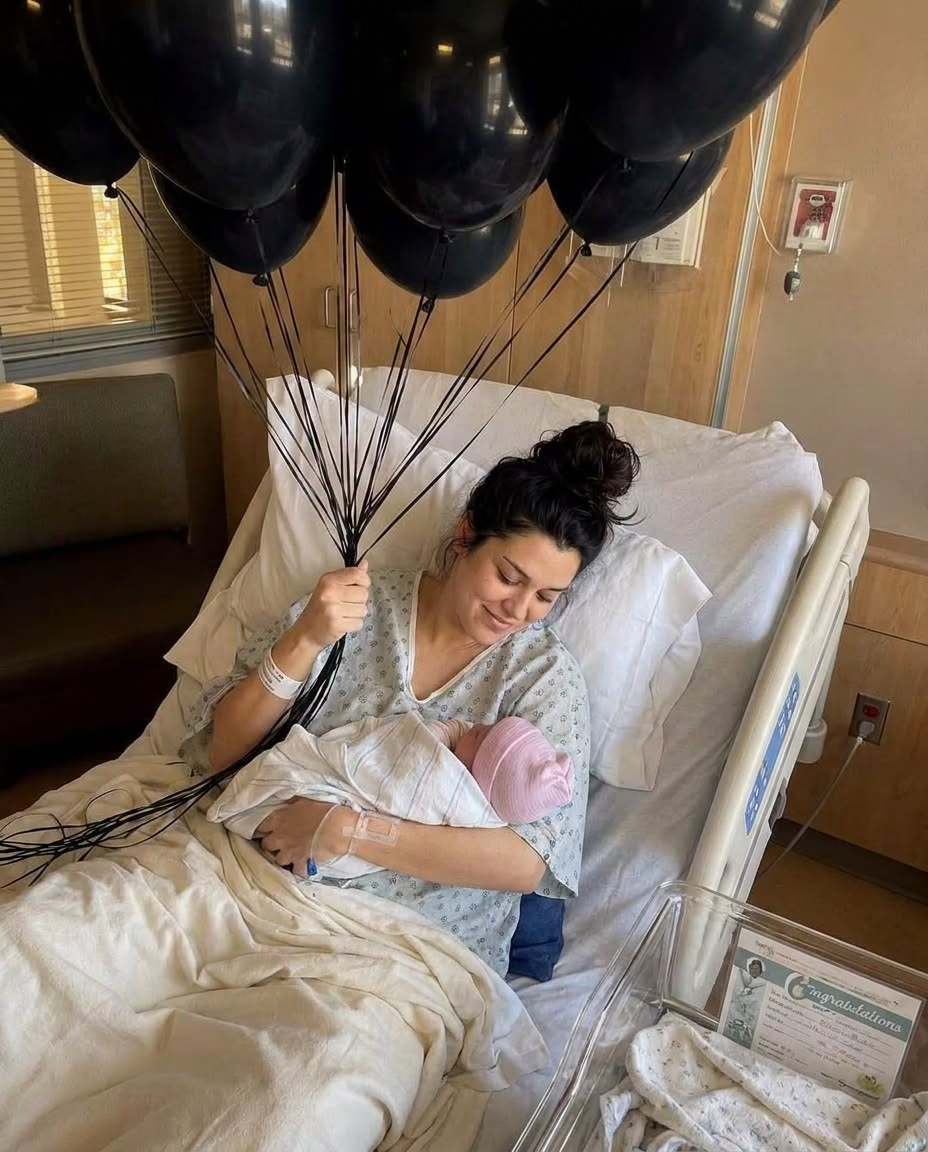
The morning after my daughter was born, a nurse walked into my hospital room carrying a cluster of glossy black balloons. Against the pale walls of the maternity ward, they looked almost sinister, and after months of being blamed by my mother-in-law for my husband Steve’s death, my first thought was that she had sent them. Ivy slept beside me in a clear bassinet, one tiny fist tucked beneath her chin, while I stared at the dark balloons and the small gift box tied beneath them. Then I noticed the ribbon was navy blue, and something inside me shifted. Steve had loved black for as long as I had known him, defending it as “classy” and joking for years that if we ever had a daughter, he would buy her tiny black shoes. I opened the white envelope attached to the box. The first line was in his unmistakable handwriting: “If you’re reading this, then two things are true. First, I am so sorry that I’m not there. Second, our daughter made it here safely—and that means you did too.”
Steve had died three weeks before Ivy’s due date after an aggressive neurological illness moved faster than either of us could understand. Only months earlier, we had been sitting on our kitchen floor laughing over three positive pregnancy tests, worrying about daycare costs and arguing over baby names. He had thrown himself into preparing for fatherhood, building the crib, tracking our budget and talking to my stomach before there was even a visible bump. Then came headaches, dizziness and small moments of confusion that escalated into scans, specialists and hospital rooms. By twenty-six weeks pregnant, I was sitting beside his bed while he apologized for leaving us, even though neither of us had chosen any of it. His final clear words to me were that he loved me and our daughter “in this lifetime and the next.” After his death, grief became harder because his mother Eileen began accusing me of failing to notice his illness soon enough. I carried those accusations through the funeral, the final weeks of pregnancy and eventually into the delivery room, where I gave birth without Steve and without the grandmother who had chosen not to come.
Inside the black box, Steve had arranged a future. First came the tiny black baby shoes he had joked about buying years earlier. Then a photograph of him standing in the half-finished nursery beside the yellow wall we had argued over, with a note on the back telling Ivy that her father had excellent taste. Beneath it sat a flash drive labeled “FOR IVY. BIRTHDAY VIDEOS. ONE THROUGH TWENTY.” There were letters too—one for her first birthday, then ages five, ten, thirteen, sixteen, eighteen and twenty—each sealed for a daughter he knew he would never watch grow up. At the bottom was a manila folder filled with life-insurance documents, retirement statements, beneficiary designations and estate-planning instructions. Steve had met with an attorney after realizing how serious his illness was. He transferred the house securely into my name, created a trust for Ivy, updated every beneficiary designation and organized the accounts so as little as possible would become tangled in probate. While I had been fighting to keep him alive, he had quietly been making sure that when he was gone, nobody could use grief, money or paperwork to make us vulnerable.
The final envelope was addressed only to me. Steve wrote that he knew I would try to survive by becoming practical—making lists, handling paperwork, taking care of the baby and pretending I was stronger than I felt. Then he gave me permission to fall apart. More importantly, he addressed the guilt Eileen had already begun placing on my shoulders. He said he had heard his mother blaming me while she thought he was asleep and had asked his doctors directly whether anything I had done differently could have changed his prognosis. Their answer, he wrote, was no. “You loved me well. All the way to the end. There was nothing you missed that would have changed this.” The letter ended with instructions to care for Ivy, to care for myself and to “check the raindrops,” another private reference from our marriage. Later that day, I played the first video. Steve appeared on the television screen thinner than I wanted to remember but smiling exactly the way he had on our kitchen floor. He told Ivy he had loved her before meeting her, joked about his inability to use technology and said that because he could not stay to be her father in person, he had “put himself in a box” so she could keep finding him as she grew.
Ivy is three months old now, and grief still changes shape by the hour. Some mornings I cry where she cannot hear me; other days her laugh fills the house so completely that sadness has to wait its turn. Steve’s black baby shoes sit on a shelf in the nursery, and I finished painting the yellow wall he started. His videos are backed up in several places, his letters are protected, and the estate documents he prepared mean I can raise our daughter without wondering whether someone else can disturb the home or financial security he intended for us. I still have no relationship with Eileen, but I no longer need to answer her accusations inside my own head because Steve already answered them for me. When it rains, I carry Ivy to the window and tell her about the man who used to call raindrops the best free show in town. Then I tell her about the morning her father learned she existed and laughed until he cried. He never got to hold her. Yet through letters, videos, careful planning and one ridiculous cluster of black balloons, he found a way to show up on the morning after she was born anyway.
Leave a Reply